
Aircraft
FPV
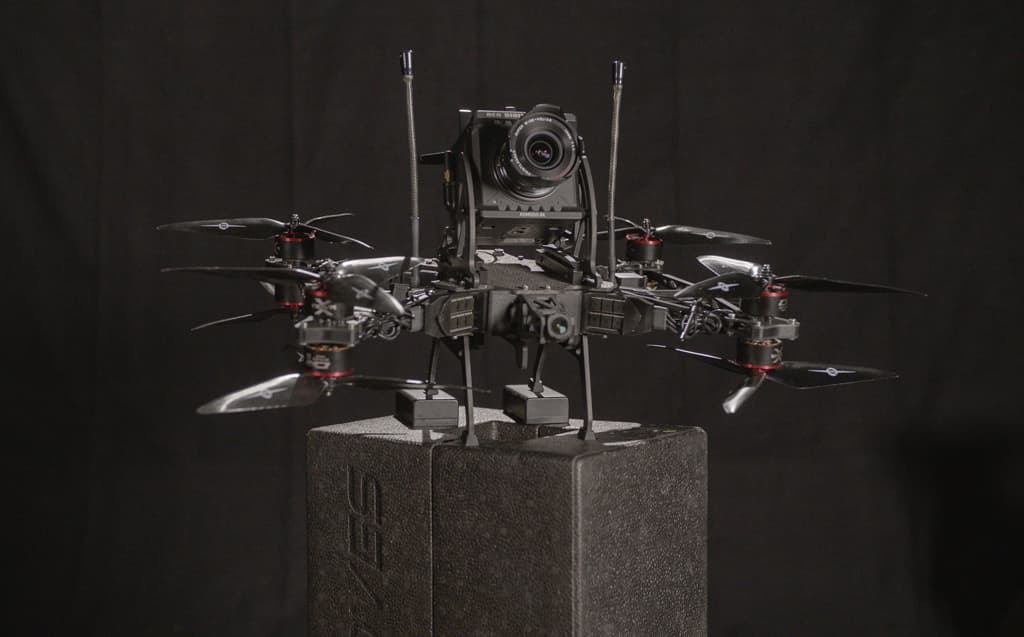
FPV is close range dynamic work through tight spaces, flying continuous moves a conventional camera drone cannot.
It is the aircraft for when the move is the constraint. Where heavy lift exists to carry a specific camera package, FPV exists to get through geography and hold speed.
01Airframe
Specifications
AGL does not publish its FPV airframes yet, so the figures that belong to them are not published either.
Close range
FPV
| Cameras | RED Komodo, Sony FX6 |
|---|---|
| The two cinema bodies flown most often. FPV carries a different body depending on the shot, so this is what it usually flies rather than a fixed configuration. | |
| Lighting payload | 1 Stratus emitter |
| A single emitter from the 2x2 array flies on FPV. | |
Why this placard is mostly empty
The figures still missing here belong to a specific airframe. Flight time, speed, and payload are properties of an aircraft, not of a category, so publishing them before naming the aircraft would mean attaching numbers to something unnamed. The cameras and the lighting payload are properties of the platform, so they do not wait on that.
A category is still something a page can be honest about, which is what the rest of this one does. What FPV is for does not depend on which airframe is flying.
02Fit
What this is right for
FPV is right for a move that has to stay unbroken through geography a larger aircraft cannot enter.
- Continuous moves that would otherwise have to be cut into shots.
- Close proximity to a subject, at speed.
- Geography a large multirotor does not fit through.
- Moving between spaces in one take, rather than matching two.
- Carrying a single Stratus emitter where light has to move fast.
What this is not right for
It is not right for a shot built around a specific camera package, and it is not right for a plan that needs figures this page does not have.
- Carrying a cinema body and the lens the DP already chose. That is heavy lift.
- Any plan that needs a flight time, a speed, or a payload figure, none of which are published here yet.
- Any requirement written against a named airframe, since the airframes are not published.
- Held, static frames, which is not what the category is flown for.
03Payload
Lighting
FPV carries a single emitter from the 2x2 Stratus array.
The full array flies under the Alta X. The single emitter configuration exists for shots where the light has to move at a speed, or reach geography, the larger aircraft cannot.
04Questions
Common questions
The questions a coordinator asks before booking, answered directly.
- What is FPV used for in film and television?
FPV is used for close range dynamic work through tight spaces.
It flies continuous moves that a conventional camera drone cannot: through gaps, along a moving subject, and between spaces without the cut a larger aircraft would need.
- How is FPV different from a conventional camera drone?
FPV is flown for the move, where a conventional camera drone is flown for the frame it can hold.
The difference shows up in geography and continuity. FPV goes where a large multirotor does not fit and holds a move a larger aircraft would have to break into shots.
- When would you use FPV instead of heavy lift?
When the move is the constraint rather than the camera package.
Heavy lift exists to carry a specific cinema body and lens. FPV exists to get through geography and hold speed. If the shot needs the camera the ground units are on, that is heavy lift.
- Can an FPV drone carry a lighting payload?
Yes. A single emitter from the 2x2 Stratus array flies on FPV.
The full array flies under the Alta X. The single emitter configuration exists for shots where the light has to move at a speed or reach geography the larger aircraft cannot.
- What are the specifications of the FPV aircraft?
The cameras and the lighting payload are published. The airframes are not, so the figures belonging to them are not either.
Flight time, speed, and payload are properties of a specific airframe, so publishing one before the aircraft is named would mean attaching a number to something unnamed. The cameras belong to the platform rather than to one airframe, which is why they do not wait on it. Ask and the configuration being flown will be confirmed directly.
05Booking
Book FPV
Send the move, the location, and the dates.
Describe the move rather than the aircraft. What the shot has to get through, how fast, and whether it has to stay unbroken are the three things that decide whether FPV is the right answer.